


Colossi of Memnon
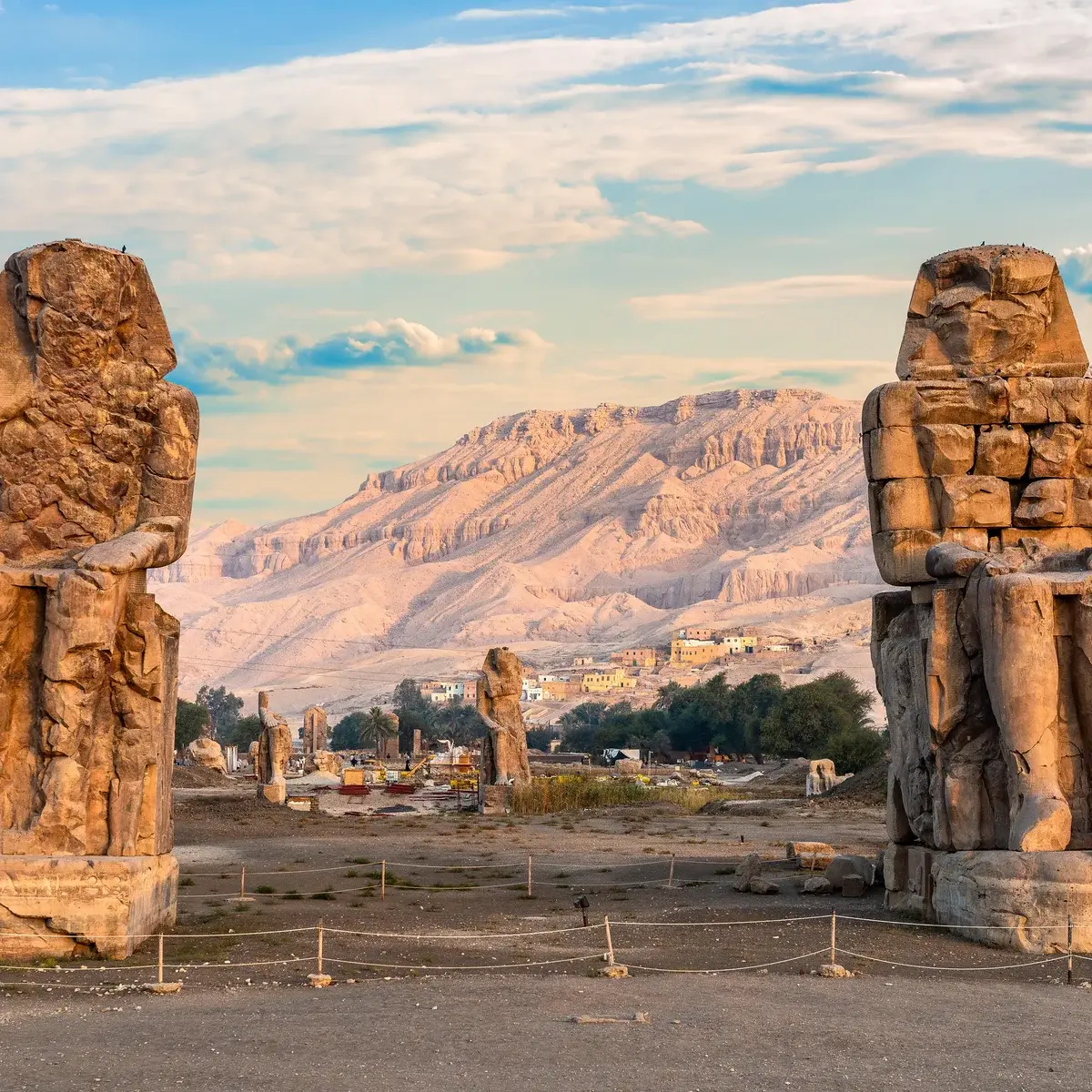
A Glimpse of Eternity: Unveiling the Story of the Colossi of Memnon!
Have you ever wondered what it's like to stand before a monument that has witnessed over 3,000 years of history? Imagine two towering, silent guardians, their faces weathered by millennia, telling a story of pharaohs, legends, and a mysterious song that once captivated the ancient world. They are the Colossi of Memnon, and they are waiting for you in Luxor.
These aren't just statues; they are a powerful gateway to a forgotten era. In this article, we'll peel back the layers of time to reveal their secrets, from the powerful pharaoh who built them to the legendary "singing" that made them a wonder of the ancient world. Get ready to uncover the story behind these iconic sentinels of the Theban Necropolis.
Uncover the Secrets of Luxor's Silent Sentinels: A Journey to the Colossi of Memnon!
Standing silent and solemn against the backdrop of the Theban hills, the Colossi of Memnon presents a sight both humbling and captivating. These two massive stone statues, seated with unwavering stillness, are more than just ancient monuments; they are sentinels of a forgotten age, silent witnesses to millennia of history. Located on the West Bank of the Nile in Luxor, they are the first and often most enduring impression for visitors journeying into the Valley of the Kings.
While they may not possess the detailed, sprawling nature of the temples they once guarded, the Colossi of Memnon hold their own unique mystique. They are a starting point, a powerful introduction to the legacy of the pharaohs who shaped this land. This article will take you on a deep dive into the story of these iconic statues, unraveling their history, revealing their secrets, and helping you understand why they are a vital stop on any trip to Egypt.
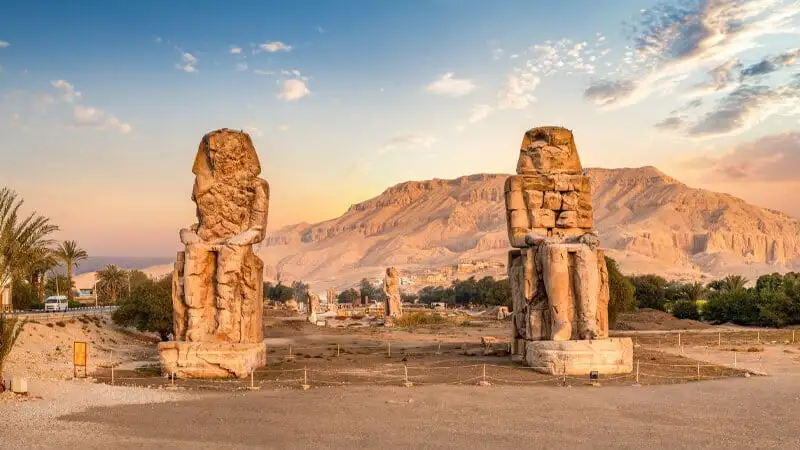
The Colossi of Memnon: A Tale of Two Giants
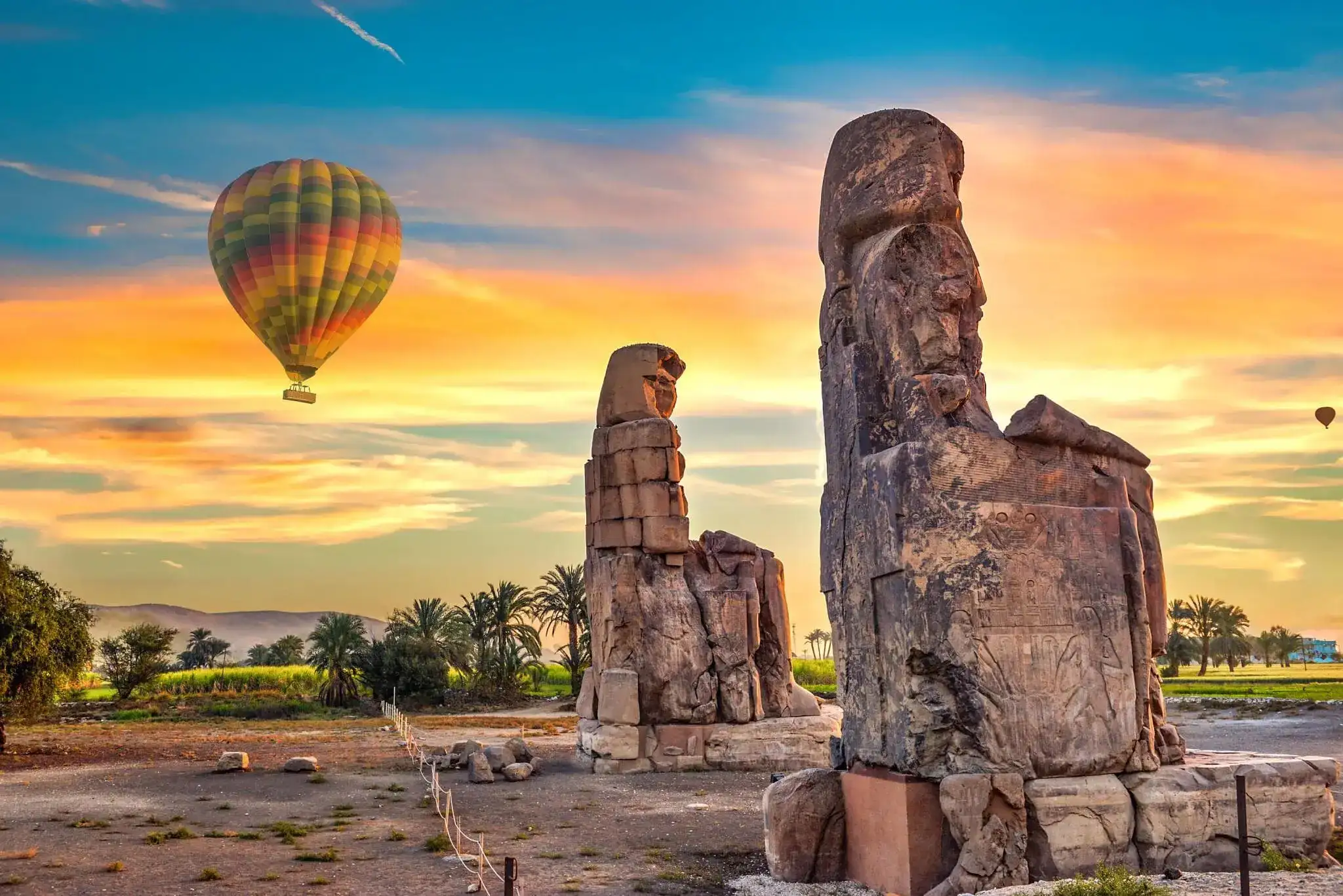
The sight of the Colossi of Memnon is striking. Carved from single blocks of quartzite sandstone, each statue rises to an impressive height of approximately 18 meters (60 feet) and weighs an estimated 720 tons. They depict the pharaoh Amenhotep III (Amenophis III) in a seated position, with his hands resting on his knees. The throne on which he sits is decorated with detailed reliefs of the goddess Hapy, the deity of the Nile's annual inundation, symbolizing the fertility of the land.
In a poignant detail, smaller statues of Amenhotep III’s mother, Mutemwiya, and his wife, Tiye, are carved on the sides of the thrones, a testament to the importance of the royal women in his life and reign. The scale of the Colossi of Memnon alone is a breathtaking achievement of ancient engineering, a powerful statement of a pharaoh's divine authority and enduring power.
Colossi of Memnon Facts
The history and legend surrounding these statues are filled with fascinating details. Here are some key Colossi of Memnon facts that reveal their rich past:
- Misidentified and Renamed: The name "Memnon" is a misnomer given by the Greeks. They believed the statues were of the mythical hero Memnon from the Trojan War. In reality, the statues depict Pharaoh Amenhotep III.
- Guardians of a Great Temple: The statues were not standalone monuments. They once flanked the entrance of Amenhotep III's enormous mortuary temple, one of the largest ever built in ancient Egypt. Unfortunately, this temple was largely dismantled over time, and its materials were reused for later constructions.
- Earthquakes and Rebuilding: The northern colossus was severely damaged by an earthquake in 27 BCE. For centuries, it became famous for a "singing" or "whistling" sound it made at dawn. This phenomenon attracted Roman visitors and led to its association with the mythical hero Memnon.
- A Family Affair: The smaller figures carved on the sides of the thrones represent the pharaoh’s mother and chief wife, a detail that speaks to the influence of these women in the royal court.
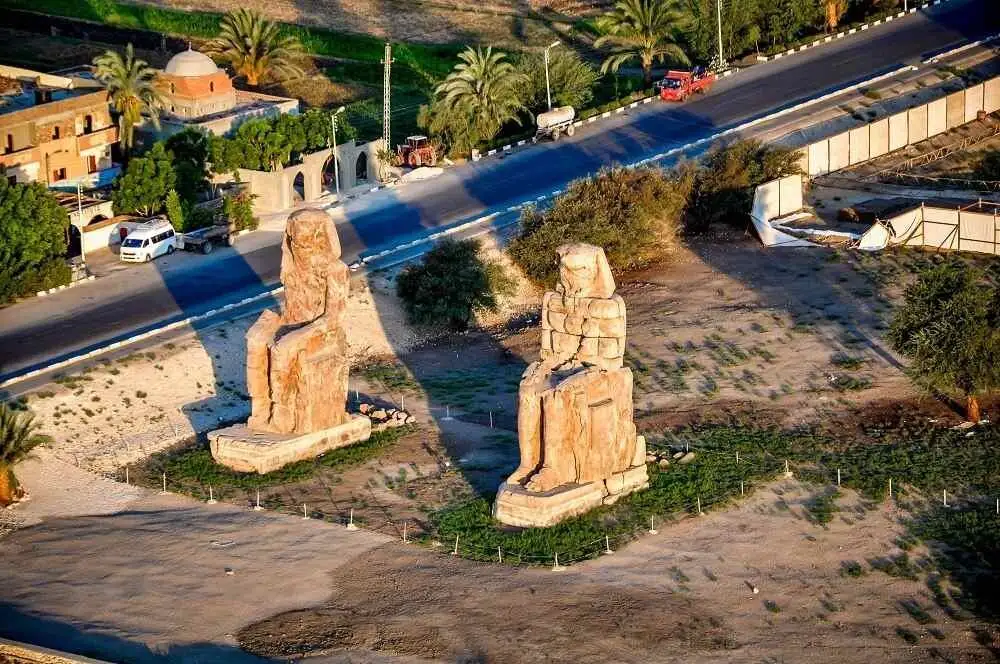
The Colossi of Memnon and the Sound of Legend
The most famous aspect of the Colossi of Memnon is the legend of their song. For centuries, visitors came from all over the Roman Empire to hear the mysterious sound that emanated from the northern statue at sunrise. The sound, described as a whistle or a lyre's chord, was a phenomenon that captivated everyone who heard it. This is why the Greeks and Romans associated the statues with Memnon, a hero who greeted his mother Eos (the dawn) with a cry.
The mystery of the Colossi of Memnon sound fascinated scholars and travelers for generations. It was a pilgrimage site for Roman emperors and common folk alike, all hoping to hear the ancient stone speak. While the true cause of the sound was likely a combination of temperature changes and moisture evaporation within the cracks of the stone, the legend gave the statues a life of their own. The "singing" stopped in the 3rd century CE after the Roman Emperor Septimius Severus attempted to repair the damage to the statue. He was successful in restoring the monument, but in doing so, he inadvertently silenced its voice.
The Colossi of Memnon: How Many Statues are There?
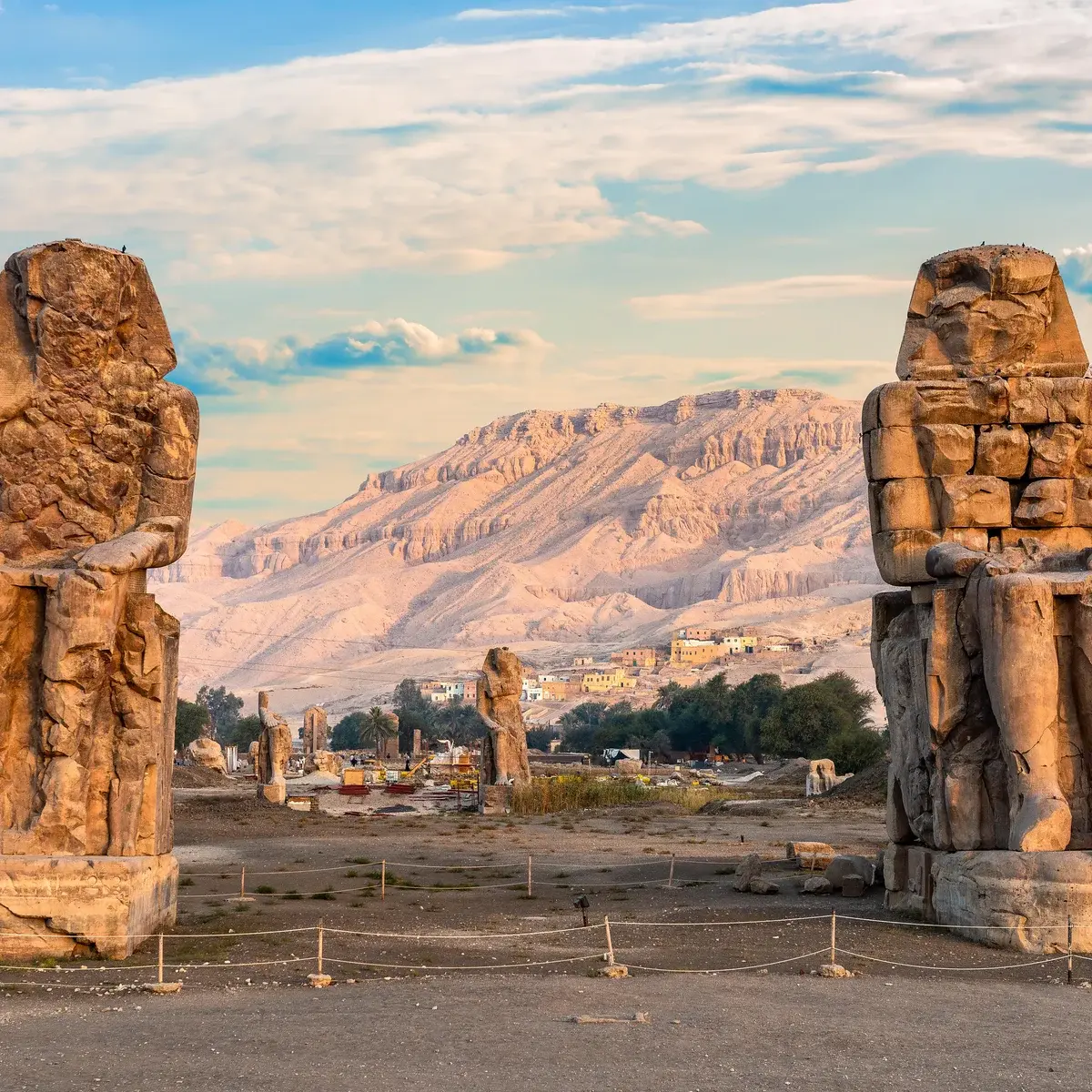
This is a straightforward but important detail to clarify. Despite being referred to as the Colossi of Memnon, there are only two statues. They stand side by side, facing east, a pair of monolithic guardians. The plural term "Colossi" refers to the fact that there are two of them, and the name "Memnon" is the legendary name given to them by the Greeks and Romans.
The Iconic Statue on the West Bank of the Nile
The Colossi of Memnon statues are the most recognizable landmarks on the West Bank of the Nile. For anyone traveling from the East Bank (the site of Luxor Temple and Karnak Temple) to the Valley of the Kings, the statues serve as an unforgettable gateway. They are a powerful symbol of the monumental scale of ancient Egyptian architecture and the grandeur of the pharaohs who commissioned these works.
Standing before the statues, you can appreciate the intricate carvings on the throne and base, which have survived thousands of years of sun, wind, and flood. The statues themselves, though weathered, still retain their imposing dignity and offer a profound sense of scale and history.
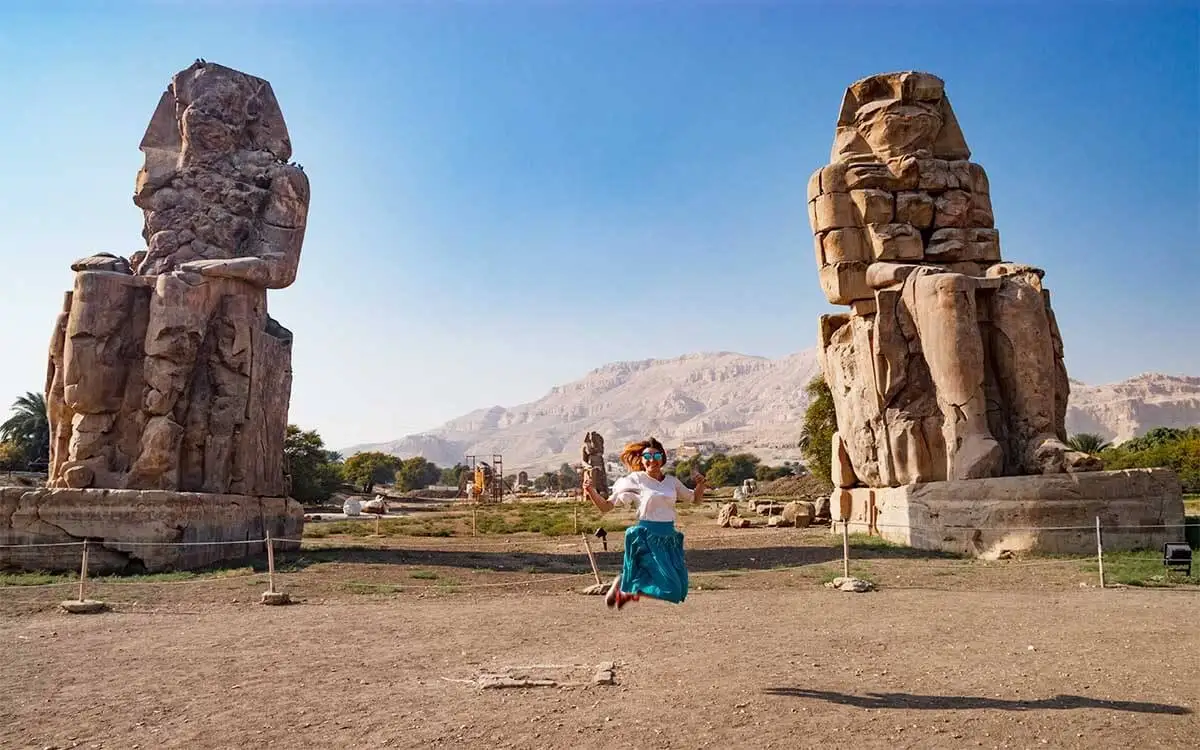
Colossi of Memnon FAQs
What does the Colossi of Memnon represent?
The Colossi of Memnon are a representation of Pharaoh Amenhotep III. They were built to serve as the guardians of his mortuary temple, a vast complex dedicated to the worship of the pharaoh and the sun god Amun-Re after his death. The statues depict Amenhotep III as a seated pharaoh, a common pose for monumental royal sculptures. Their massive size and strategic placement facing the sunrise symbolize the pharaoh's enduring power and his connection to the divine, particularly the sun god.
Who built the Colossi of Memnon?
The Colossi of Memnon were built by Pharaoh Amenhotep III, a powerful and influential ruler of the 18th Dynasty. His reign, from approximately 1390 to 1352 BCE, was a time of great prosperity and artistic achievement. He commissioned a vast mortuary temple complex, and the colossi were the centerpiece of its entrance. The architect responsible for this monumental project was likely Amenhotep, son of Hapu, a highly respected and influential official of the time.
Does the Colossi of Memnon still sing?
No, the Colossi of Memnon no longer sing. The mysterious sound that made the northern statue famous for centuries ceased after it was repaired by the Roman Emperor Septimius Severus in 200 AD. While the sound was a captivating phenomenon that drew visitors from across the ancient world, it was likely caused by a combination of natural forces acting on the fractured stone. The reconstruction of the statue's upper body removed the conditions necessary for the sound to be produced.
Where are the Colossi of Memnon located today?
The Colossi of Memnon are located on the West Bank of the Nile River, in the modern-day city of Luxor, Egypt. They are situated on the road that leads from the Nile to the Valley of the Kings and the Valley of the Queens. They stand in an open field, easily accessible and often the first stop for visitors exploring the west side of the river.
How much does it cost to go to the Colossi of Memnon?
Visiting the Colossi of Memnon is free. There is no entrance fee to see and photograph the statues. They are located in an open area right by the roadside.
What is the mystery of Memnon?
The mystery of Memnon is the famous "singing" or "whistling" sound that emanated from the northern colossus at dawn. The sound, heard by travelers for centuries, was a puzzle that fascinated the ancient world. The Greeks and Romans believed the sound was the lament of Memnon, a mythical hero, greeting his mother, the goddess of the dawn. While the mystery has since been explained as a natural phenomenon related to the sun's heat and moisture in the cracked stone, the legend continues to add a layer of romance and intrigue to the statues.
What is the statue on the West Bank of the Nile?
The statues on the West Bank of the Nile are the Colossi of Memnon. They are the twin statues of Pharaoh Amenhotep III, originally erected to guard the entrance of his mortuary temple. They are the most prominent and well-known statues on the West Bank, serving as a gateway to the vast necropolis of Thebes.
How old are the Colossi of Memnon?
The Colossi of Memnon were built during the reign of Pharaoh Amenhotep III, which was from approximately 1390 to 1352 BCE. This makes the statues roughly 3,360 years old. They have stood for over three millennia, enduring earthquakes, floods, and the passage of time.
What happened to the Colossi of Memnon?
Over time, a series of natural disasters and the passage of centuries have impacted the Colossi of Memnon. The mortuary temple they once guarded was almost completely destroyed by repeated Nile floods. The northern colossus was badly damaged by a major earthquake in 27 BCE, which caused the upper half of the statue to collapse. This fracture led to the famous "singing" phenomenon. The statues have since been extensively studied and protected by archaeologists, and restoration efforts have been made to preserve them. Today, they remain a powerful testament to the skill of the ancient builders and the resilience of their creations.
A Journey to the West Bank and The Colossi of Memnon
The Colossi of Memnon are more than just a quick photo stop; they are a profound introduction to the incredible history that awaits you on the West Bank of the Nile. Standing before them, you can feel the weight of over 3,000 years of history and appreciate the scale of the civilization that built them.
Are you ready to witness these silent sentinels for yourself? Let us help you plan your journey to the heart of ancient Thebes. At Nile cruises Tours, we specialize in creating custom and guided tours to the Colossi of Memnon and the other magnificent sites on the West Bank.
Don't let this dream remain a dream. Your adventure into the heart of ancient Egypt is just a click away. You can book your tour now by browsing our dedicated Colossi of Memnon trips section on our website or simply reach out to us directly via WhatsApp at +201013712752.
Experience the eternal legacy of the pharaohs with us. Your journey begins here.
Post Comment