


Luxor Temple
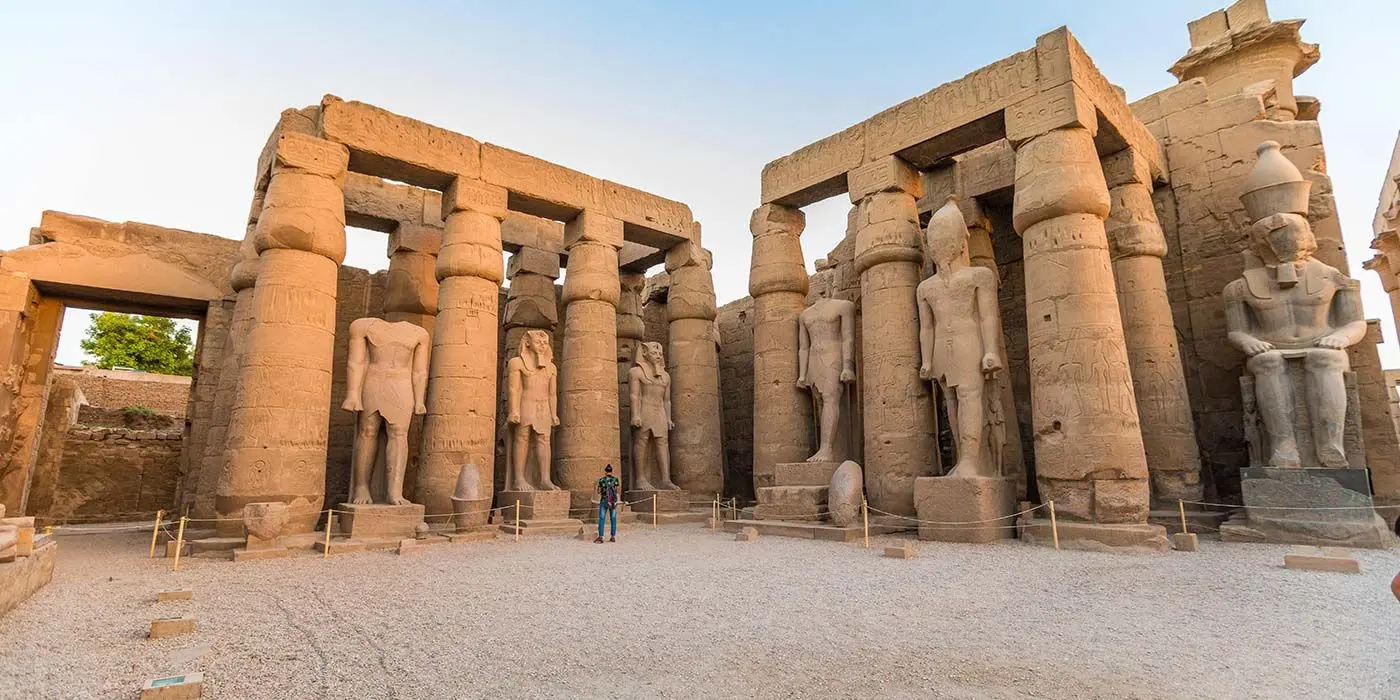
Unveiling the Southern Sanctuary: A Journey to Luxor Temple!
Nestled on the east bank of the Nile, right in the beating heart of modern-day Luxor, stands a monument that defies time: Luxor Temple. While its neighbor, the colossal Karnak Temple, often gets the spotlight for its sheer size, Luxor Temple holds a different kind of magic. It’s a place of intimate grandeur, a sacred space where the past isn't just a story in a book—it’s etched into every stone, whispering tales of pharaohs, gods, and the very essence of ancient Egyptian life.
For anyone planning a trip to Egypt, Luxor Temple is not just a stop; it’s an essential experience, a pilgrimage into the soul of a civilization that shaped the world. This article will be your guide, revealing the history, the hidden gems, and the practical tips to make your visit to Luxor Temple truly unforgettable.
The Purpose of Luxor Temple: More Than Just a Place of Worship
Unlike many other Egyptian temples built to honor a single deity or serve as a mortuary temple for a pharaoh's afterlife, the Luxor Temple had a unique and vital function. It was known as "Ipet Resyt," the "Southern Sanctuary," and was dedicated to the rejuvenation of kingship. It was here, in this sacred space, that pharaohs were believed to be reborn in the presence of the gods, their divine right to rule renewed.
This wasn't a one-off event. It was the climax of the annual Opet Festival, a magnificent celebration that saw the statues of the Theban Triad—Amun, his consort Mut, and their son Khonsu—process from their primary home at Karnak Temple down a magnificent, 2.5-kilometer Avenue of Sphinxes to Luxor Temple. This festival was a vibrant spectacle, a spiritual and political event that brought together the ruler and his people in a celebration of fertility, renewal, and the enduring power of the gods.
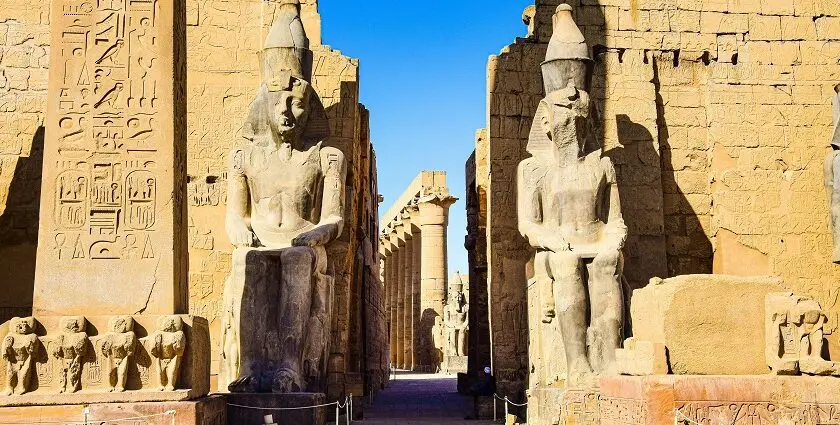
A Timeline Etched in Stone: The Builders of Luxor Temple
Walking through the temple is a literal journey through centuries of history. The core of the temple was built by Amenhotep III during the 18th Dynasty of the New Kingdom, around 1400 BCE. A grand and influential ruler, Amenhotep III’s vision created the temple's magnificent inner sanctuary, the grand colonnade, and the Sun Court. His reign marked a peak of artistic and architectural achievement, and you can see it in the graceful lines and intricate carvings that still exist today.
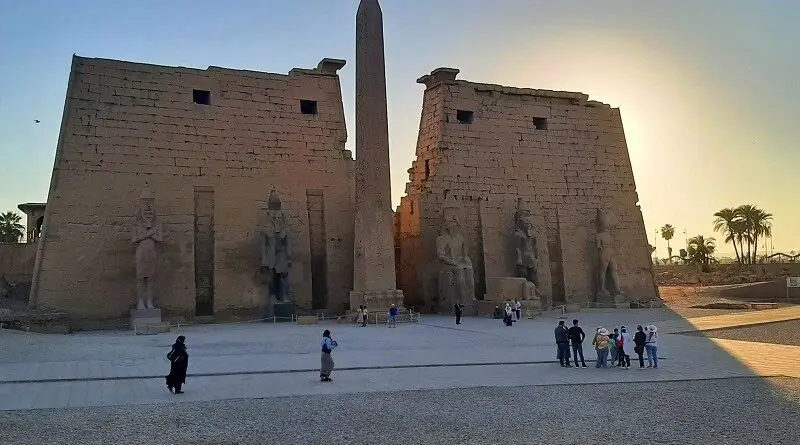
But the story doesn't end there. Subsequent rulers, eager to leave their mark and connect themselves to the divine legitimacy of the site, added their own elements. The most notable additions came from Ramses II, a pharaoh known for his monumental building projects. Ramses II added the massive pylon entrance, the first courtyard, and a forest of colossal statues, effectively transforming the entrance to the temple and solidifying his legacy.
Later, even the great Alexander the Great left his footprint, adding a small chapel to the inner sanctum. This wasn't just a place for Egyptian pharaohs; it was a site so powerful that even foreign conquerors sought to associate themselves with its magic.
What to See and Explore at Luxor Temple
As you step into the temple, prepare to be transported. The experience is best when you take your time, letting the weight of history settle in.
1. The Avenue of Sphinxes: A Grand Processional Path
Your journey into the past begins before you even enter the main temple. The recently restored Avenue of Sphinxes is a grand processional that once connected Luxor Temple to Karnak Temple. Lined with hundreds of sphinx statues, some with the heads of rams and others with human heads, this avenue was the ceremonial path for the gods during the Opet Festival. Walking along this path today gives you a sense of the immense scale and spiritual significance of the ancient world.
2. The Pylon of Ramses II: A Grand Entrance
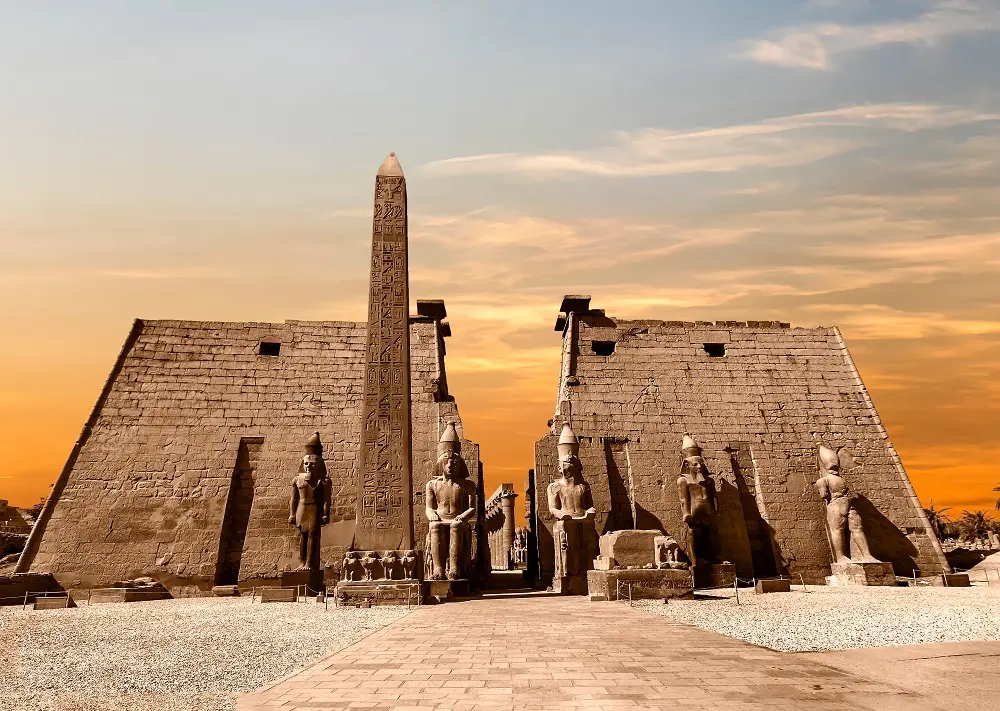
The entrance to the temple proper is marked by the towering pylon of Ramses II. This monumental gateway is a masterpiece of ancient propaganda, covered in intricate reliefs that depict Ramses' military triumphs, most notably the Battle of Kadesh. Look for the six colossal statues of Ramses II that once stood here—only a few remain, but their size is a testament to the pharaoh’s ego and power. And speaking of statues, you'll notice a single, soaring obelisk still standing proudly. Its twin, a gift to France in the 19th century, now stands in Paris's Place de la Concorde, a stunning reminder of the temple’s global reach.
3. The Courtyard of Ramses II: A Forest of Columns
Beyond the pylon lies the first courtyard, a vast open-air space surrounded by a double row of columns. The walls are decorated with scenes of Ramses II making offerings to the gods. It's an impressive space, a testament to the pharaoh's devotion and his desire to be seen as a pious ruler. Look closely at the walls, and you might spot a procession of Ramses' many sons, each with their name inscribed, a fascinating glimpse into the royal family tree.
4. The Sun Court of Amenhotep III: The Original Heart of the Temple
This courtyard, built by Amenhotep III, is a quieter, more serene space. The columns here are more delicate and elegant, with papyrus-bundle capitals that open like flowers, creating a sense of lightness and grace. This area feels like the original, spiritual core of the temple. In 1989, a cache of 26 magnificent statues was discovered here, buried by priests in Roman times, likely to protect them. They now reside in the Luxor Museum, offering a fascinating peek into the temple’s rich history.
5. The Great Colonnade and the Birth Room
The Great Colonnade is a truly breathtaking space. Seven pairs of towering, open-papyrus columns form a long hallway, designed to mimic the papyrus reeds of the Nile. The walls were decorated by the young pharaoh Tutankhamun and his successors, depicting the Opet Festival in vibrant detail. Look for the lively scenes of musicians and acrobats, bringing the ancient festival to life. Just beyond this hall is Amenhotep III’s "birth room," where scenes depict the pharaoh's symbolic divine birth, linking him directly to the gods and cementing his legitimacy.
Essential Information for Your Visit to Luxor Temple
To make your exploration of this magnificent site as smooth and enriching as possible, here's some practical information:
Luxor Temple Tickets: Your Gateway to the Past
Gaining access to this historical treasure requires a ticket. Luxor Temple tickets can typically be purchased at the entrance to the temple. It's advisable to check the current prices and opening hours before your visit, as these can sometimes change. As of late 2023, the general admission ticket price for foreign adults is around EGP 500. Students with a valid international student ID may be eligible for a discounted rate, so it's always worth inquiring and presenting your ID. Keep your ticket safe, as you may need to present it at various points within the temple complex. Consider purchasing a Luxor Pass if you plan on visiting multiple sites in Luxor, as this can offer cost savings.
Navigating the Ancient Grounds: Luxor Temple Map
While the layout of Luxor Temple is relatively straightforward compared to the sprawling Karnak complex, having a basic understanding of its structure can enhance your visit. You can often find Luxor Temple maps available at the entrance or within guidebooks. Familiarizing yourself with the location of key areas like the Pylon of Ramses II, the Courtyard of Ramses II, the Colonnade of Amenhotep III, and the inner sanctuary will allow you to navigate the site with greater ease and ensure you don't miss any of its highlights. Taking a moment to study a map beforehand can also help you appreciate the chronological development of the temple as different pharaohs added their contributions.
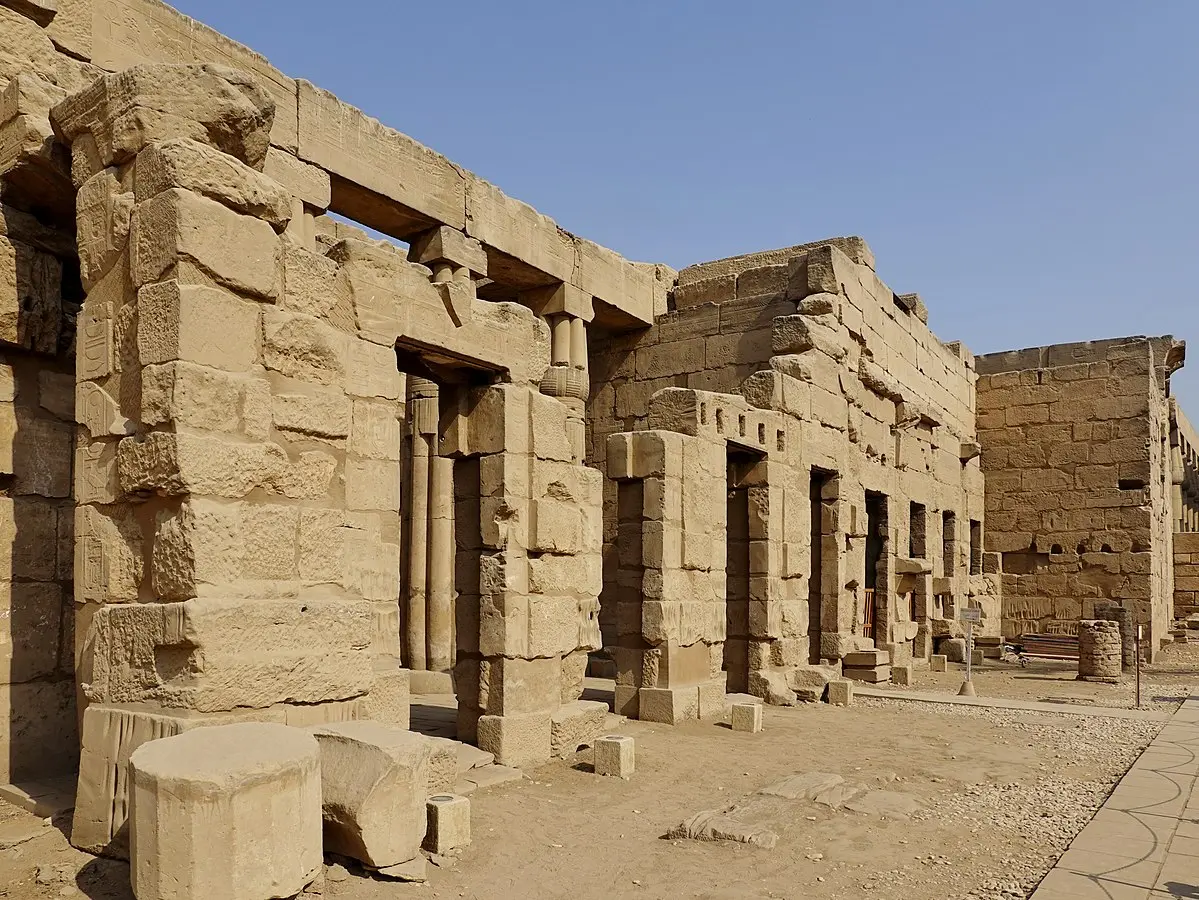
Fascinating Snippets of History: Luxor Temple Facts
Delving into some key Luxor Temple facts can make your visit even more engaging:
- Continuous Use: Unlike some ancient sites that were abandoned, Luxor Temple saw continuous use throughout different periods, even serving as a Christian church and later having a mosque built within its walls.
- Opet Festival Focus: Its primary importance was its role in the annual Opet Festival, a crucial religious and political event that reaffirmed the pharaoh's divine right to rule.
- North-South Axis: Unlike many Egyptian temples oriented east-west towards the rising sun, Luxor Temple is oriented along a north-south axis, likely aligned with Karnak Temple.
- Alexander's Sanctuary: Alexander the Great built a small sanctuary dedicated to the Roman Imperial cult within the temple's inner sanctum, showcasing the site's enduring sacredness.
- Discovery of Statues: In 1989, a remarkable cache of 26 statues dating to the New Kingdom was discovered buried beneath the floor of the Sun Court, now a highlight of the Luxor Museum.
Luxor Temple: Egypt’s Timeless Monument of Majesty.
Enduring Significance: Why is the Luxor Temple Important?
The Luxor Temple holds immense importance for several reasons. Firstly, it provides invaluable insights into the religious beliefs and royal ideology of ancient Egypt, particularly the concept of divine kingship and its annual renewal. The detailed carvings and inscriptions depict the rituals and processions of the Opet Festival, offering a visual narrative of this crucial event. Secondly, the temple showcases the architectural prowess and artistic achievements of the New Kingdom, spanning the reigns of influential pharaohs like Amenhotep III and Ramses II. Its well-preserved structures and intricate decorations serve as a testament to the skill and vision of ancient Egyptian builders and artisans. Finally, its continuous history of use and adaptation by different cultures underscores its enduring sacred significance and its role as a cultural landmark throughout millennia.
A Legacy in Stone: When was the Luxor Temple Built?
The main construction of Luxor Temple began around 1400 BCE during the reign of Amenhotep III of the 18th Dynasty. He was responsible for building the core of the temple, including the inner sanctuary and the Colonnade of Amenhotep III. Later, during the 19th Dynasty (around 1250 BCE), Ramses II significantly expanded the temple by adding the large pylon entrance and the first courtyard. While these are the most prominent building phases, other rulers, including Tutankhamun, Horemheb, and even Alexander the Great, also made additions or modifications to the temple complex over time. Therefore, the Luxor Temple represents a palimpsest of ancient Egyptian history, with different layers reflecting the contributions of various pharaohs across several centuries.
Unraveling the Layers: Luxor Temple History
The Luxor Temple history is a rich tapestry woven with the ambitions of pharaohs and the enduring beliefs of a civilization. Amenhotep III initiated the construction of the temple as a central place for the Opet Festival, dedicated to the Theban Triad and the rejuvenation of royal power. The festival, and thus the temple, played a vital role in maintaining the religious and political stability of Egypt. Ramses II's later additions dramatically altered the temple's entrance, making a powerful statement about his own authority and connection to the divine. During the Late Period and the Greco-Roman era, the temple continued to be a significant religious site, even incorporating new shrines and adapting to changing rulers. In Roman times, a legionary camp was even established within the temple grounds. Later, the temple was partially buried by Nile silt and urban development, leading to the construction of a Christian church and the Mosque of Abu Al-Haggag within its ancient walls. It was only in the late 19th century that significant excavation and restoration efforts began to reveal the full grandeur of the Luxor Temple as we see it today, allowing us to appreciate its long and fascinating journey through history.
Fun Facts and Tips for Your Luxor Temple Visit
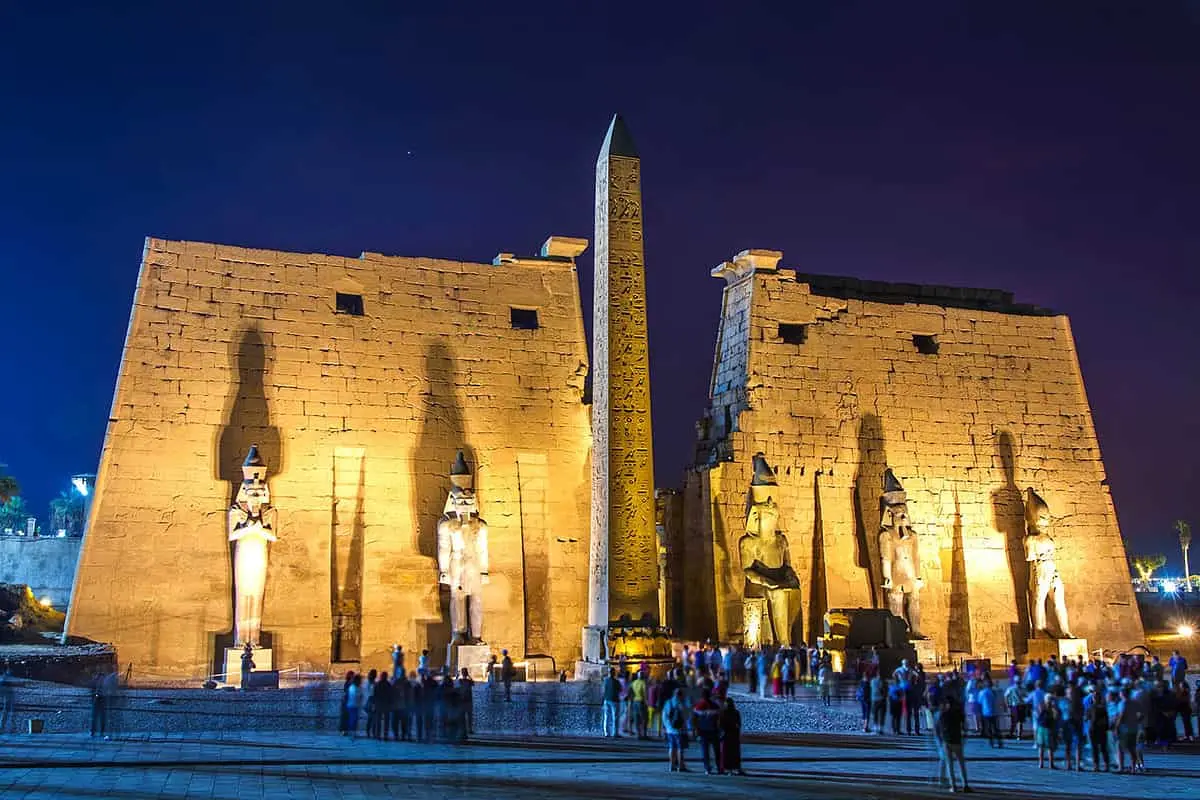
- Visit at Night: While a daytime visit allows you to appreciate the details in the natural light, a visit at night is a must-do. The temple is stunningly illuminated, and the shadows and light play on the ancient reliefs and columns, creating a magical, otherworldly atmosphere.
- A Mosque in the Temple: Look for the Mosque of Abu Al-Haggag, which was built within the temple complex in the 13th century CE. It’s a remarkable example of how different layers of history and religion have co-existed on this sacred site for millennia.
- The Mummification Museum: Just a short walk from the temple, this museum offers an intriguing look at the ancient Egyptian practice of mummification. It’s a great companion to your temple visit, providing context on the rituals and beliefs surrounding the afterlife.
- Stay Hydrated: Luxor is incredibly hot, especially in the summer. Bring plenty of bottled water and wear light, loose-fitting clothing. Hats and sunglasses are your best friends here.
- Dress Respectfully: As a site of religious significance, it is best to dress modestly, covering your shoulders and knees.
- Tickets and Timing: Ticket prices for Luxor Temple are subject to change, but currently hover around EGP 500 for foreign adults. The temple is open daily, typically from 6 a.m. to 8 p.m. with the last entry an hour before closing. To avoid the worst of the heat and crowds, aim for a visit in the early morning or later in the afternoon.
Luxor Temple is more than just a collection of ancient stones; it is a living chronicle of a magnificent civilization. It tells a story of gods and kings, of power and ritual, and of the enduring human spirit. When you walk its halls, you aren't just a tourist; you are a time traveler, stepping into a world that, against all odds, has stood the test of time. So, pack your bags, prepare to be amazed, and get ready to experience the eternal magic of Luxor Temple.
Luxor Temple FAQs:
What is so special about Luxor Temple?
Luxor Temple is special for its unique purpose and its continuous, layered history. Unlike many other temples dedicated to a specific god or a pharaoh's funerary rites, Luxor Temple was a place of divine kingship. It was here that pharaohs were believed to be spiritually reborn and their right to rule was renewed during the annual Opet Festival. This specific function makes it a rare and significant site.
The temple is also remarkable for its state of preservation and its juxtaposition with the modern city of Luxor. It's a living part of the city, not an isolated ruin. This blend of old and new creates a powerful sense of timelessness. The temple is also notable for the diverse cultures that have left their mark on it, from the ancient Egyptians and Romans to the modern-day Mosque of Abu Al-Haggag, which is still in use within the temple's structure. This layering of history makes it a fascinating place to explore.
Are Karnak and Luxor Temple the same?
No, Karnak and Luxor Temple are not the same, but they are closely related. They are both monumental temple complexes located on the East Bank of the Nile in Luxor, but they served different purposes and were built on a different scale.
- Karnak Temple: This is the largest religious complex in the world. It was the principal place of worship for the Theban Triad (Amun, Mut, and Khonsu) and was a major pilgrimage site for centuries. It is a sprawling complex of sanctuaries, pylons, and courtyards, added to by over 30 different pharaohs.
- Luxor Temple: This temple is smaller and more compact than Karnak. Its primary purpose was to celebrate the Opet Festival, a procession that brought the statues of the Theban Triad from Karnak to Luxor Temple. The temples were once connected by the impressive Avenue of Sphinxes, which is currently being restored to its full glory.
Think of Karnak as the main cathedral and Luxor Temple as a special sanctuary used for an important annual ceremony.
Which pharaoh built the Luxor Temple?
The main construction of Luxor Temple was a collaborative effort of several pharaohs, but it was primarily started by two key rulers:
- Amenhotep III (c. 1390-1352 BCE): He initiated the temple's core construction during the New Kingdom. He was responsible for the inner sanctuary, the grand colonnade, and the Sun Court.
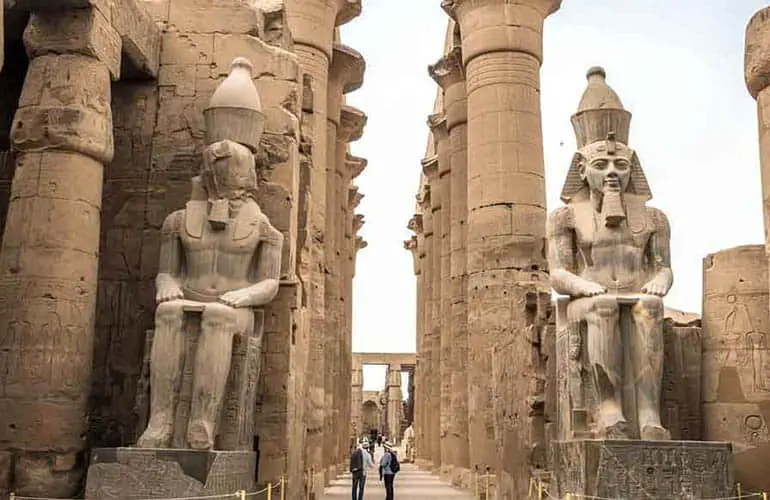
- Ramses II (c. 1279-1213 BCE): A great builder and self-promoter, Ramses II later expanded the temple significantly. He added the massive pylon entrance, the first courtyard, and the iconic colossal statues of himself that guard the entrance.
Other rulers, including Tutankhamun and Alexander the Great, also made smaller additions or modifications, but Amenhotep III and Ramses II are the main builders of the temple as it stands today.
How much time to spend in Luxor Temple?
You can spend a little or a lot of time in Luxor Temple depending on your level of interest. A general visit to see the main highlights will take approximately 1.5 to 2 hours. This is enough time to walk through the major courtyards, see the colossal statues, and admire the detailed carvings.
If you are a history enthusiast or want to explore the temple in greater detail, especially with a guide, you could easily spend 2 to 3 hours or more. Many visitors also choose to see the temple at both day and night to experience the different atmospheres. The evening visit, with the temple beautifully illuminated, is a unique and recommended experience.
Is it worth visiting Luxor Temple?
Yes, Luxor Temple is absolutely worth visiting. It is a pivotal part of any trip to Luxor and one of the most magnificent and well-preserved ancient sites in Egypt. The temple offers a compelling blend of history, architecture, and spirituality that is different from other sites. The detailed reliefs, the massive scale of the statues, and the powerful sense of stepping back in time make it an unforgettable experience. Its unique role in the Opet Festival and its place in the modern city make it an essential stop for anyone interested in ancient Egyptian culture.
Which is better, Karnak or Luxor?
This is a common question, and the answer depends on what you're looking for. Neither is "better," but they offer different experiences.
Choose Karnak if you want:
-
- Overwhelming scale and size. It's the largest religious complex in the world.
- Architectural variety. It showcases different styles from multiple pharaohs over centuries.
- To get lost in a forest of columns. The Great Hypostyle Hall is a truly epic space.
Choose Luxor Temple if you want:
-
- A more intimate and refined experience. It's smaller and easier to navigate.
- To see the purpose of the Opet Festival. The temple’s design and carvings tell the story of the festival's procession and rituals.
- To experience a site at night. Luxor Temple is arguably more beautiful and atmospheric when lit up after dark.
Ultimately, most visitors to Luxor make time to see both. They are conveniently located on the same side of the Nile and the Avenue of Sphinxes connects them, making it easy to visit both and appreciate their individual and collective importance.
A Timeless Journey Awaits You
As you step out of the majestic Luxor Temple, you're not just leaving an ancient site; you're carrying a piece of its magic with you. Every stone, every hieroglyph, and every colossal statue tells a story of a civilization that mastered the art of building for eternity. This isn't just a place to visit—it's an experience that connects you to the past in a profound way.
Ready to make this journey? We're here to help. At Nile cruises Tours, we specialize in crafting unforgettable trips to Luxor Temple, ensuring you get to witness its grandeur with expert guidance.
Don't let this dream remain a dream. Your adventure into the heart of ancient Egypt is just a click away. You can book your tour now by browsing our dedicated Nile cruises Tours section on our website, or simply reach out to us directly on WhatsApp at +201013712752.
Experience the eternal legacy of Luxor Temple with us.
Post Comment