


Temple of Hatshepsut
A Royal Statement in Stone: Unveiling the Temple of Hatshepsut!
Forget what you know about ancient Egypt. It's not just about pyramids and male pharaohs. Imagine a queen so powerful she declared herself king, and then built a monument to prove it—a temple so audacious and elegant it's unlike anything else in the land. This is the Temple of Hatshepsut.
Perched dramatically against the cliffs of Deir el-Bahari, this terraced masterpiece is a bold statement in stone. It's the story of a woman who defied tradition, and its walls tell a tale of divine birth, epic voyages, and a legacy almost erased from history. Get ready to uncover the secrets of one of ancient Egypt's most fascinating rulers and her breathtaking temple.
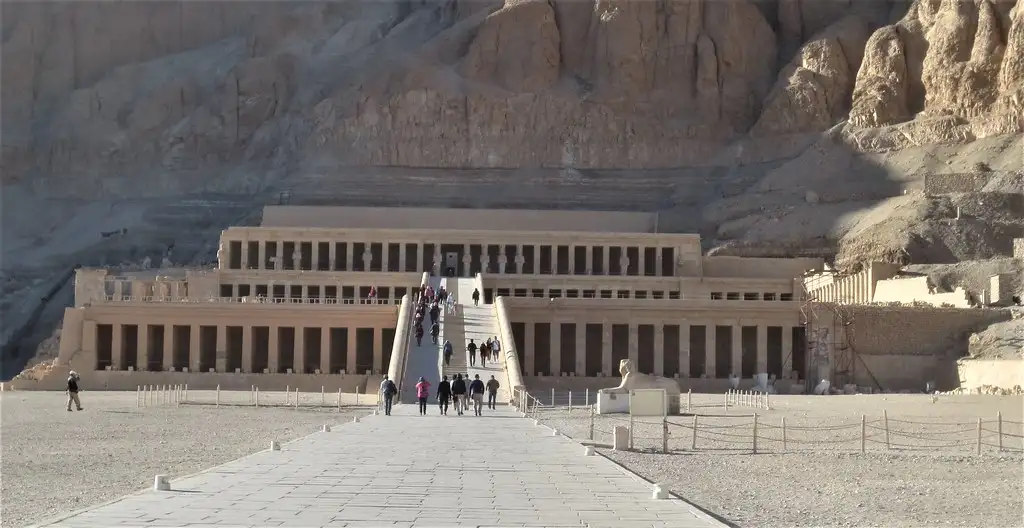
Nestled against the towering cliffs of Deir el-Bahari on the West Bank of the Nile, the Temple of Hatshepsut stands as a breathtaking tribute to one of ancient Egypt's most powerful and enigmatic rulers. This isn't your typical pyramid or hypostyle hall; it's a terraced architectural masterpiece that blends seamlessly into the dramatic natural landscape. Unlike the temples built by her male counterparts, this structure is a bold, refined statement of power, legitimacy, and divine connection.
A visit to the Temple of Hatshepsut is a deep dive into the story of a woman who defied tradition to become pharaoh. It's a place that speaks volumes not only through its grand design but also through the intricate reliefs that line its walls, telling a powerful narrative of her reign. For anyone traveling to Luxor, this temple is a necessary stop, offering a unique perspective on ancient Egyptian history, art, and ambition. This article will be your guide, providing a comprehensive look at its history, architecture, and enduring importance.
Temple of Hatshepsut Architecture
The Temple of Hatshepsut is a masterpiece of ancient architecture, designed by Hatshepsut’s royal architect and confidant, Senenmut. Its design is both innovative and a nod to a great predecessor. It was heavily influenced by the nearby mortuary temple of Mentuhotep II of the 11th Dynasty, but Hatshepsut’s version was built on a grander and more symmetrical scale.
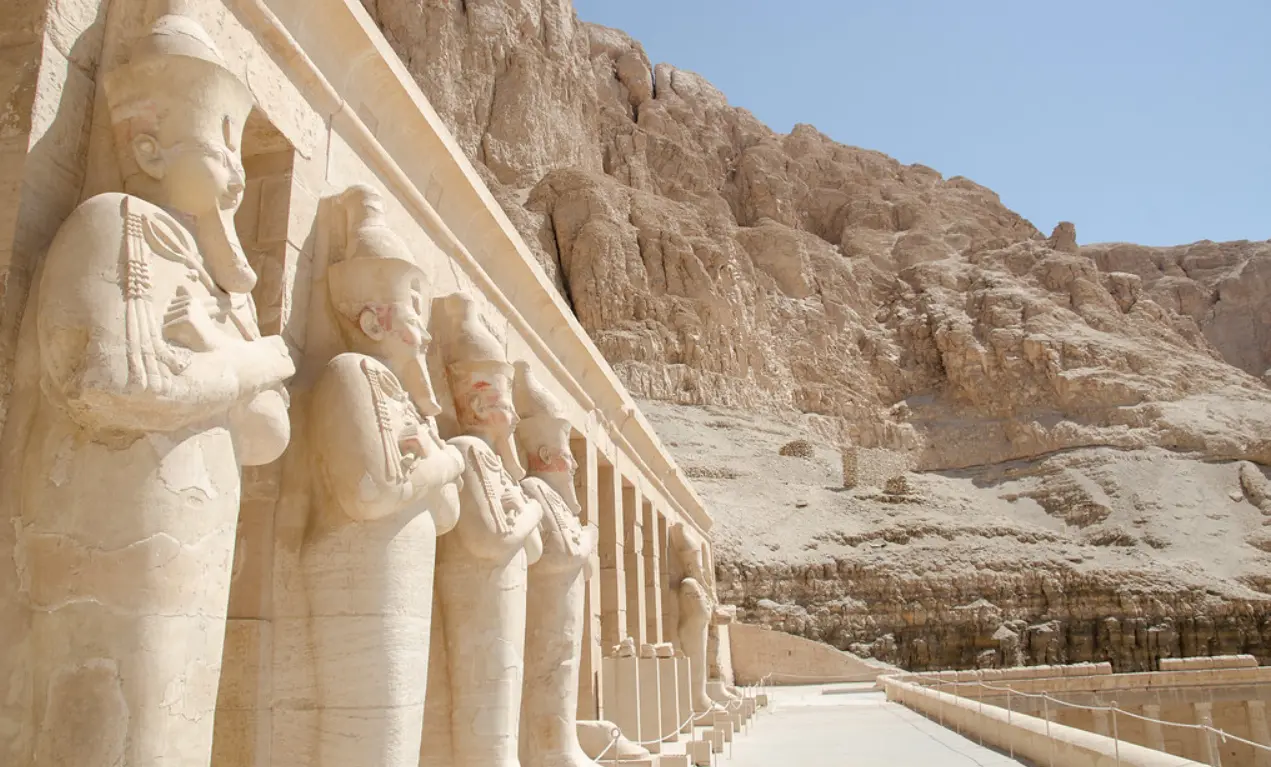
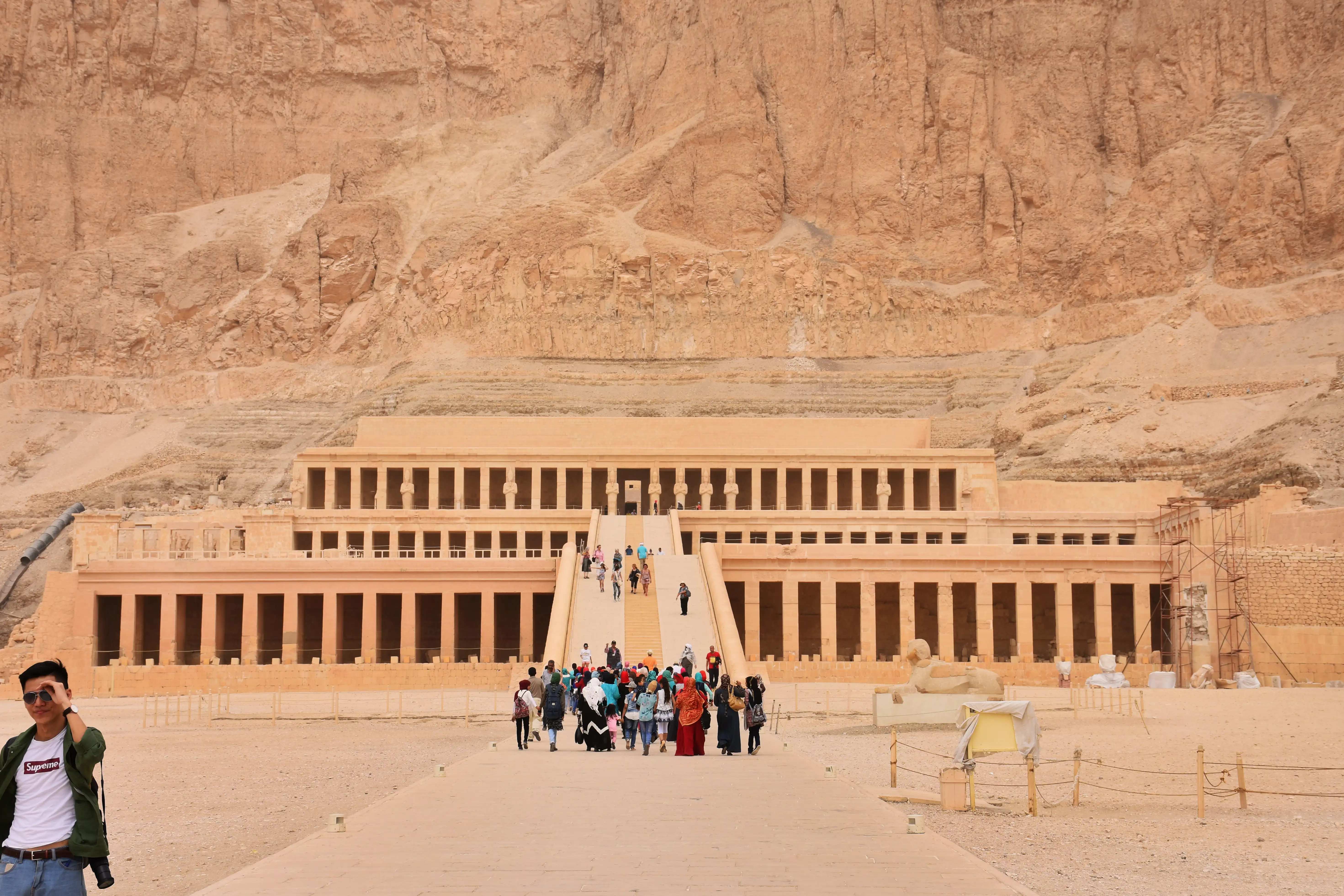
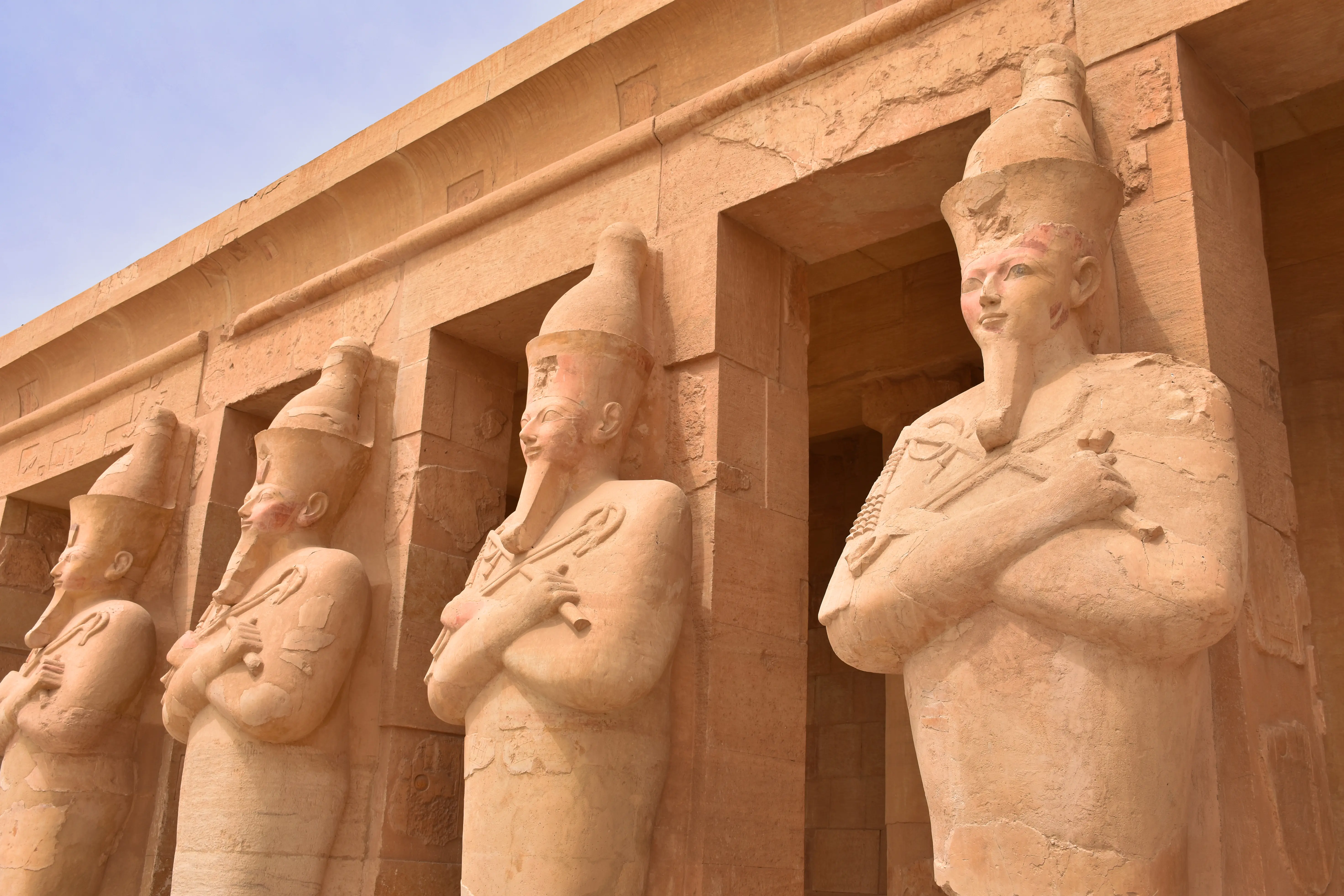
The temple's most striking feature is its three terraced levels, which are connected by long ramps. These ramps lead from the desert floor up to the temple's sanctuary, creating a harmonious visual flow that mirrors the sacred journey of the gods. Each terrace is fronted by a magnificent colonnade with finely carved reliefs. The open-air design, which contrasts with the enclosed hypostyle halls of other temples, allows the structure to feel light and airy, beautifully integrated with the surrounding cliffs.
Where is the Temple of Hatshepsut Located?
The Temple of Hatshepsut is located on the West Bank of the Nile River, in the area known as Deir el-Bahari. This site is situated directly across the river from the modern city of Luxor (ancient Thebes). The temple is built at the base of the cliffs of the Theban mountain, a location that was sacred to the ancient Egyptians. Its unique position and design, with its terraces rising up from the desert floor, make it one of the most visually stunning archaeological sites in the world. It is part of the vast Theban Necropolis, which also includes the Valley of the Kings and the Valley of the Queens.
Why Was the Temple of Hatshepsut Built?
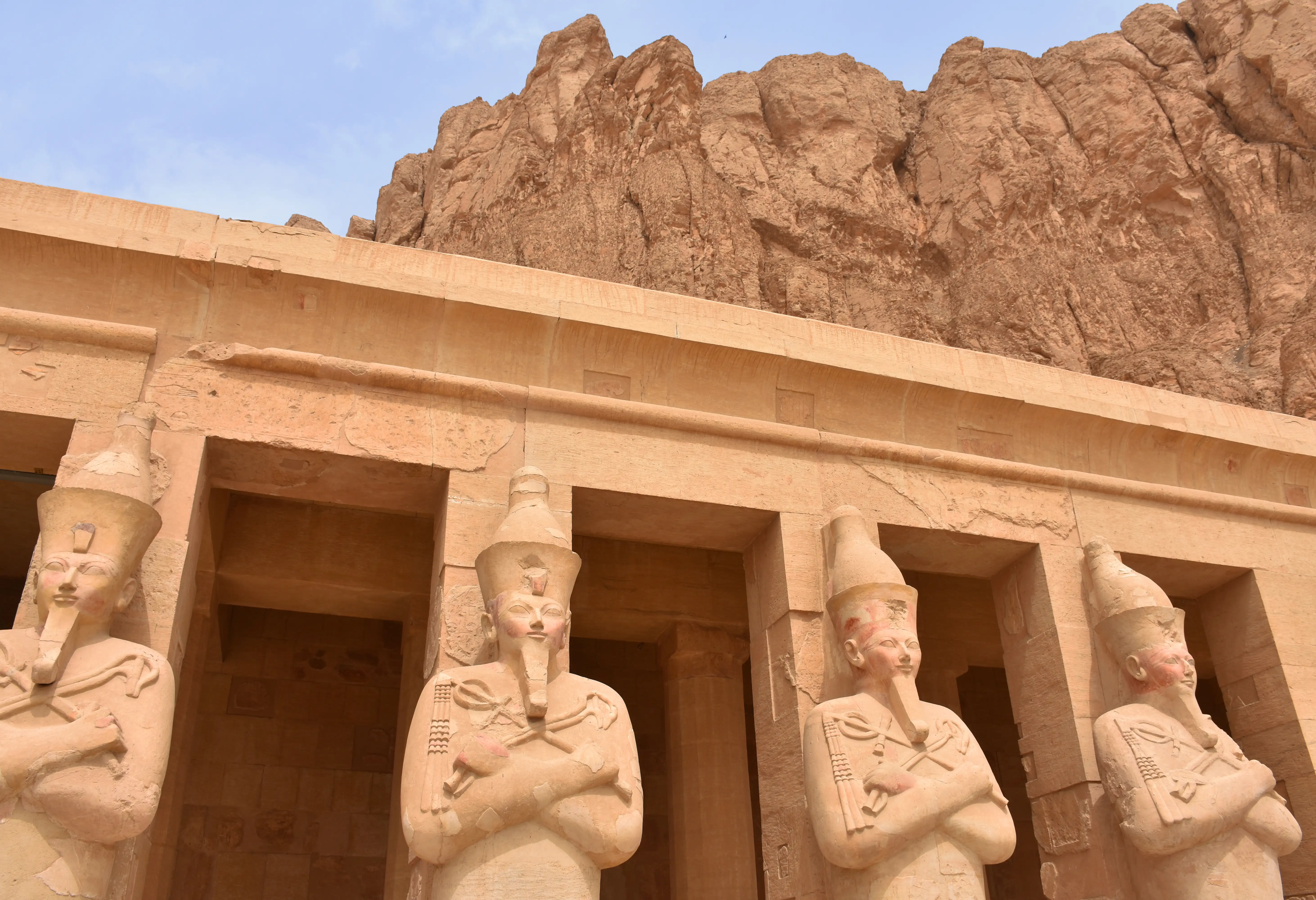
The Temple of Hatshepsut was built for two primary reasons: as a mortuary temple for the queen's eternal cult and as a testament to her legitimacy as pharaoh. Mortuary temples were constructed to ensure the ruler's eternal life and to house the rituals for their soul (ka) after death. Hatshepsut, a female ruler in a patriarchal society, needed to go a step further. She used her temple to present a powerful and undeniable narrative of her divine right to rule. The reliefs within the temple explicitly depict her as the daughter of the god Amun-Re, not just of her earthly father, Thutmose I. This divine birth story was crucial to solidifying her position as a legitimate ruler in the eyes of the priests and the people.
What Was the Mortuary Temple of Hatshepsut Used For?
The mortuary Temple of Hatshepsut was a place of worship for the cults of several deities and for the queen herself after her death. Its main purpose was to ensure the immortality of the queen's spirit. Rituals and offerings were performed here for her ka, allowing her to transition into the afterlife and join the gods. The temple also served as a "Mansion of a Million Years," a place where the gods could reside and be worshipped. Chapels within the complex were dedicated to the cults of Amun-Re, Hathor (goddess of motherhood and love), and Anubis (god of the dead). It was also a key stop during the "Beautiful Festival of the Valley," when the statue of Amun from Karnak Temple would be brought across the Nile to the West Bank to visit the mortuary temples of the pharaohs.
What is the Mortuary Temple of Hatshepsut Made Of?
The mortuary Temple of Hatshepsut is primarily built of limestone. Unlike many other temples in the region that were constructed from sandstone, the use of white limestone gives Hatshepsut’s temple a unique, elegant appearance that stands out against the reddish-brown cliffs. The stone was quarried nearby and expertly carved and placed to create a smooth, tiered facade. The use of this particular stone also made it an ideal canvas for the vibrant and detailed painted reliefs that adorned its walls, many of which still retain their color today.
Why is the Temple of Hatshepsut Important?
The Temple of Hatshepsut is important for several reasons. It is a stunning example of New Kingdom architecture, showcasing the innovation and elegance of the 18th Dynasty. However, its most significant importance lies in its political and historical context. The temple serves as a masterful piece of royal propaganda, designed to justify the reign of a female pharaoh. The reliefs document her divine birth, her successful trading expedition to the land of Punt, and her peaceful reign. These reliefs are invaluable historical records, providing a unique perspective on the reign of this exceptional ruler. The temple's story is a testament to Hatshepsut's ambition and the lengths she went to ensure her legacy.
Where Was Hatshepsut Buried?
Hatshepsut was not buried in her mortuary temple. Mortuary temples were not burial sites; they were places for the eternal cult of the deceased pharaoh. Hatshepsut’s final resting place was in the Valley of the Kings, the royal burial ground located just over the cliffs from her temple. Her tomb, designated KV20, was originally intended for her father, Thutmose I, but she had it expanded and had her own sarcophagus placed within. Her mummy was later moved to a different tomb, KV60, and was finally identified in 2007, confirming her identity and solving a long-standing archaeological mystery.
Why is the Temple of Hatshepsut so important?
The Temple of Hatshepsut is so important because it is a direct reflection of a pivotal moment in ancient Egyptian history—the reign of a female pharaoh. It's a structure built not only for worship but as a political statement of divine right and legitimacy. The temple's walls are a historical document, vividly illustrating Hatshepsut's narrative, from her divine birth to her trading expeditions and her peaceful rule. Its architecture is also a significant departure from other temples of the time, showcasing an innovative design that was both beautiful and functional. It is a monument to Hatshepsut's power, ambition, and skill as a ruler.
Who destroyed Hatshepsut's temple?
The Temple of Hatshepsut was not physically destroyed, but it was subjected to a campaign of erasure by her stepson and successor, Thutmose III. After Hatshepsut's death, he attempted to obliterate all memory of her reign. He ordered the destruction of her statues and had her name and images meticulously chiseled from the temple walls. This was not an act of wanton destruction but a deliberate effort to rewrite history and remove her from the line of succession. This act of damnatio memoriae (condemnation of memory) is a powerful and somber part of the temple's history, and the visible scars of this effort are still present today.
Is Hatshepsut Temple worth visiting?
Yes, the Temple of Hatshepsut is absolutely worth visiting. Its stunning architecture, fascinating history, and the beautiful reliefs make it a standout attraction. The site offers a unique visual experience as it is built directly into the cliffs, unlike other temples that stand on open ground. The story of Hatshepsut herself—a woman who ruled as a king—is one of the most compelling narratives in ancient history, and her temple is the centerpiece of that story. The visit provides a vital context to the other sites in Luxor and is a powerful testament to Hatshepsut's legacy.
Can you go inside the Temple of Hatshepsut?
Yes, you can go inside the Temple of Hatshepsut. The site is a popular tourist destination with well-maintained paths and accessible areas. You can walk up the main ramps, explore the three terraced levels, and enter the various courtyards and chapels within the temple. Many of the relief carvings on the walls are in excellent condition and can be viewed up close.
How much does it cost to visit the Temple of Hatshepsut?
The cost to visit the Temple of Hatshepsut is very reasonable. The price for a standard entry ticket for foreign visitors is approximately EGP 360. Students with a valid international student ID are often eligible for a 50% discount. It's always a good idea to check the most current prices as they can change periodically.
Can you walk between Valley of the Kings and Hatshepsut?
Yes, it is possible to walk between the Valley of the Kings and the Temple of Hatshepsut. There is a hiking trail that goes over the mountain ridge that separates the two sites. The hike is relatively short, usually taking about 30 to 45 minutes, but it is steep and can be challenging, especially in the heat. It offers a spectacular view of both sites. For most visitors, however, it is more common and convenient to travel between the two sites by car or a tour bus, as they are part of a standard West Bank tour itinerary.
How old is Queen Hatshepsut temple?
The Temple of Hatshepsut was built during the reign of Queen Hatshepsut, which spanned from approximately 1479 to 1458 BCE. This means the temple is approximately 3,480 years old. The construction itself took about 15 years to complete, a testament to the skill and scale of ancient Egyptian building projects.
A Royal Invitation
The Temple of Hatshepsut is an architectural and historical marvel that tells a story of ambition, power, and defiance. Its unique design and powerful reliefs make it an essential part of any Egyptian adventure. Standing on its terraces, you can feel the spirit of a great queen who left an indelible mark on history.
Are you ready to witness this extraordinary monument for yourself? Let us help you plan a trip that brings this remarkable story to life. At Nile cruises Tours, we specialize in crafting personalized and guided tours to the Temple of Hatshepsut and the other magnificent sites on the West Bank.
Don't just read about history—live it. You can book your tour now by browsing our dedicated Temple of Hatshepsut trips section on our website or simply reach out to us directly via WhatsApp at +201013712752.
Experience the timeless beauty and power of ancient Egypt with us. Your journey begins here.
Post Comment